How to store important documents at home
Published 2026-10-18 · Updated 2026-10-18
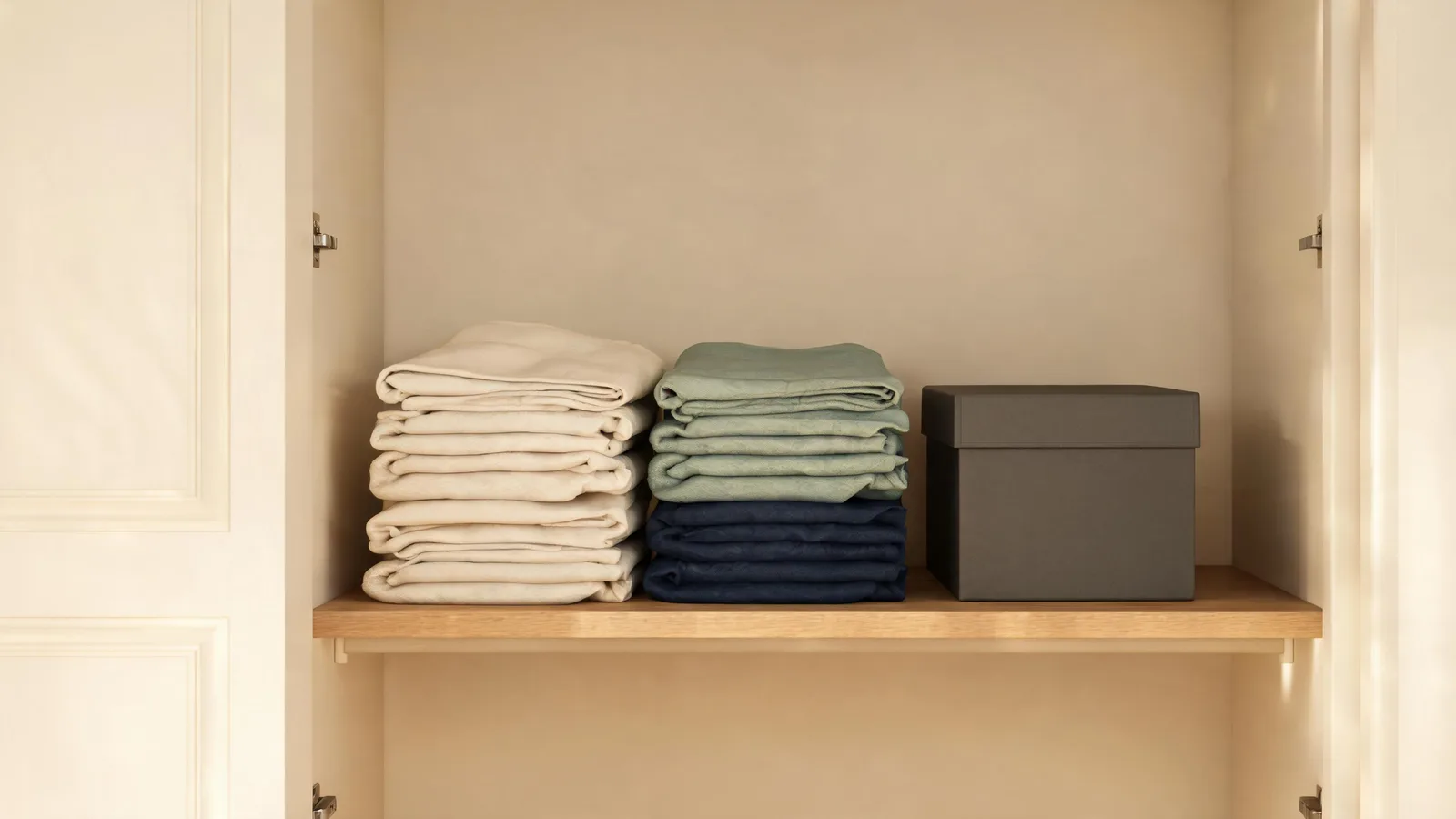
Store paper copies of important documents in a fireproof and waterproof box or safe at home, a bank safe deposit box, or with a trusted friend or relative. Ready.gov also says to store important documents in a safety deposit box, on an external drive, or on the cloud. For copies you may need to carry, use a waterproof, portable container for insurance policies, identification, and bank account records. Write the spot on an index. A container with no index is a hiding place.
What each place is for
| Place | What the source says | Limit the source names |
|---|---|---|
| Fireproof and waterproof box or safe at home | Paper copies of important documents, and a password-protected drive kept in that box | FEMA's sheet calls the box fireproof and waterproof, and it stops there on ratings. |
| Bank safe deposit box | Paper copies kept off site | Ask the bank, or check state law, about who can and cannot open the box |
| Trusted friend or relative | A copy outside your home | You are trusting that person with the papers |
| Waterproof portable container | Copies of insurance policies, identification, and bank account records | Ready.gov's kit page describes copies you can carry, not a vault for every original |
| External drive or cloud | Electronic copies | FEMA says a password-protected format on a flash or external drive, or a secure cloud-based service. Ready.gov names an external drive or the cloud |
Read the label on a box you buy. This page does not turn the word "fireproof" on a sticker into a test result. FEMA uses "fireproof and waterproof" for the home box. That is the claim to shop against, not a rating this page invents.
What belongs in the home box
FEMA's safeguard sheet tells you to inventory vital records, a passport, a driver's license, a Social Security card, housing papers (lease, mortgage, deed), vehicle papers (title, registration, loan), insurance policies, tax statements, and a will, trust, or power of attorney if you have signed one. Those are the papers that earn a spot in the fireproof and waterproof box or in the bank box.
If a will, a trust, or a power of attorney is already signed, it was prepared with an attorney or through that document's official process. Storing a signed copy does not create one. Ask the attorney who prepared it where the signed original should stay, then write that spot on the index.
If valuable items sit in a basement, FEMA says you may want to move them higher and put them in waterproof containers to avoid water damage. A flood-and-fire home safe is the option FEMA names for small items. That basement sentence is about valuable items, not about a named paper. The waterproof box FEMA already names for paper copies is the related step.
What not to leave only in a bank box
The limit FEMA does state is about the bank box, not about a cookie tin. If you use a safe deposit box, ask the bank, or check state law, to confirm who can and cannot access it. Until you have that answer, do not treat the bank box as the only place a paper lives.
Keep a second copy of papers you may need to carry. Ready.gov's kit page names copies of insurance policies, identification, and bank account records, saved electronically or in a waterproof, portable container. The home safe can hold an original. The portable container holds the copy you can pick up without a bank appointment.
The FTC says to keep financial records, Social Security cards, and Medicare cards in a safe place, and to shred them before you throw them away. That is handling, not a brand of safe. Do not leave those cards in an open drawer because the "real" set is in a bank box you cannot open today.
Electronic copies
FEMA says to store electronic copies in a password-protected format on a flash drive or external hard drive kept in the fireproof and waterproof box, or to use a secure cloud-based service. Ready.gov names an external drive or the cloud in the same breath as a safety deposit box. Use a password the way that service asks. Do not write the password on the index. The index records where the drive or the account instructions are kept.
The Zhush paperwork guide has no waterproof comparison and no index of locations. The Zhush is stronger on a room-by-room paper flow, and it names a fireproof water-tight safe. Exhibit Indexes' storage post has no fireproof comparison and no waterproof comparison. Exhibit Indexes' storage post is stronger on sorting papers into locked, long-term, and emergency piles.
Write the location down
Pick one home spot, one off-site spot if you use a bank or a trusted person, and one carry copy. Then write three lines: original, copy, who else knows. Check the lines when you move a box.
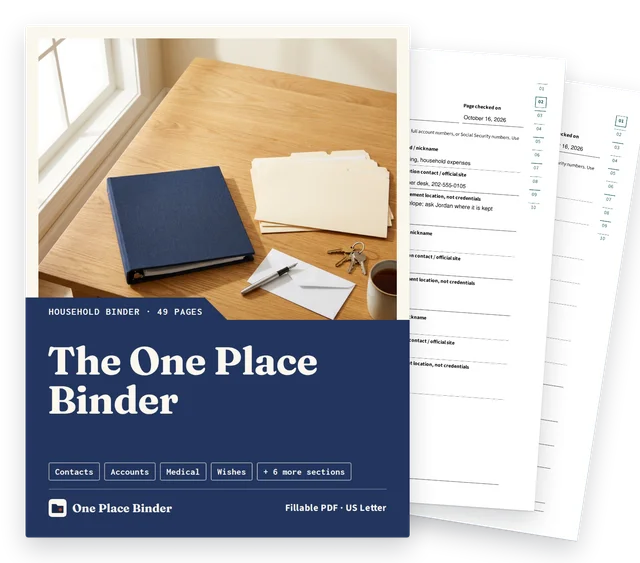
The One Place Binder has document-location pages that record where papers are kept, and a digital-life map that records where access instructions are kept, never passwords. It is a fillable PDF on US Letter paper. The One Place Binder is $11.99. Typing tested only with pdf.js (Firefox's PDF engine); other apps not tested. Not legal advice. Not a will.
The FEMA safeguard sheet lists a fireproof and waterproof box, a bank safe deposit box, and a trusted person rather than one container. The honest limit is access: a box you cannot open, or a cloud folder nobody else can find, does not help. Which papers belong in the box is on the important documents list. How to group them before you store them is on how to organize important documents.
Questions
Where can I store my important documents?
FEMA names a fireproof and waterproof box or safe at home, a bank safe deposit box, or a trusted friend or relative. Ready.gov also names an external drive or the cloud, and a waterproof portable container for copies you may need to carry.
Where should important documents be stored?
Put hard-to-replace paper in the fireproof and waterproof box, the bank box, or with a trusted person, and write the choice on an index. Keep carry copies of insurance, identification, and bank-account records in a waterproof portable container.
How can I keep my important documents safe?
Store the papers in one of the places FEMA names, tell one person where the index is, and shred discards that show personal information. A locked drawer with no index is not a plan.
Where should I keep all my important documents?
Do not put every paper in one box. Originals that are hard to replace can go in the home safe or the bank box. Copies you may need to carry belong in the portable container Ready.gov describes.
What not to store in a safe?
Do not leave the only copy of a paper someone else must reach in a bank box until you have asked who can open it. Keep carry copies outside that box as well.
What important documents should I keep in a safe?
FEMA points to a fireproof and waterproof box or safe for paper copies of important documents, including vital records, identity cards, housing papers, vehicle titles, insurance, and tax statements.
Where should I store my important documents?
At home, use a fireproof and waterproof box or safe. Off site, use a bank safe deposit box or a trusted person. For a copy you can grab, use a waterproof portable container or a password-protected drive.
What is the most secure place to store documents?
FEMA lists a fireproof and waterproof box, a bank safe deposit box, and a trusted person. Pick the one you can still open when you need the paper.
Where to keep important documents at home?
Keep them in a fireproof and waterproof box or safe, not in an open pile. If valuables are in a basement, FEMA says to move them higher and use waterproof containers.
How do I keep my documents safe?
Use the FEMA storage options, keep Social Security and financial papers in a safe place as the FTC describes, and shred them when you throw them out.
What to keep important documents in?
A fireproof and waterproof box or safe for paper you rarely carry, and a waterproof portable container for copies of insurance, identification, and bank-account records.
What should I keep my important documents in?
Use a box the source actually describes: fireproof and waterproof at home, or a waterproof portable container for the copies you may carry. Label it, and write the spot on an index.