What goes in a death binder
Published 2026-10-16 · Updated 2026-10-16

A death binder is a folder of locations and contacts. It is not a will. These are the sections, and what each one holds.
- Contacts: who to call, and their phone numbers.
- Legal papers: where the signed will, trust, and powers of attorney are kept. Those documents are made with an attorney. The binder does not create them.
- Accounts: institution, account type, phone, and the last four digits if you write a number.
- Insurance: company, policy location, claims phone.
- Documents: where the birth certificate, marriage record, lease or deed, and tax file are filed.
- Work: employer benefits contact, and where those papers are.
- Digital life: where access instructions are kept. Not the password.
- Wishes: preferences, and where any signed instructions already are.
- Handoff: where this folder lives, and who has been told.
Sections to include
Contacts. Write the people a family would call in the first week: a partner or sibling, the employer benefits desk, each insurer's claims line, a lawyer if you have one, and anyone who holds a key. A name and a phone number are the whole entry.
Legal papers. One line per document: name, date signed, attorney or office, and the drawer or vault. A will, a trust, and a power of attorney are made with an attorney. The EFFAK toolkit says a power of attorney is a legal document that a lawyer should write and review. Copy that standard for the other signed papers: record the location, and stop. Preferences for a service can be a note. A note does not appoint anyone and does not make a gift.
Accounts. Bank, credit union, retirement, and loan. For each, write the institution, the type, and the phone number on the statement. The EFFAK account form asks for the last four digits of the account number. That is the number to write, if you write one. Ready.gov's financial preparedness page warns against sharing a bank account number, a Social Security number, or a credit card number. A binder on a shelf is easy to open. Full numbers do not belong there.
Insurance. Life, home, auto, and any other policy you pay. Company, where the policy packet is, claims phone. A copy of the declarations page is useful. The rest of the packet can stay where it is.
Documents. Location of the birth certificate, marriage record, name-change papers if any, vehicle title, and tax file. USAGov says many organizations require a certified copy of the death certificate, ordered from the vital records office of the state where the death occurred. The binder can name that office. It cannot be the certified copy. USAGov's notify page says agencies will need the Social Security number and those certified copies. Point at the card's location. Do not write the number out.
Work. Human-resources contact, and where employer life, retirement, or pension papers are filed. A phone number and a desk name are enough.
Digital life. Email, the bank's website, photo storage, and any subscription a family would need to close. Write the service name and where the access instructions are kept. A password manager, a sealed envelope in a different place, or a recovery card: name the method. Leave the password itself off this page.
Wishes. Burial or cremation preference, a song, a person to speak. Write it as a preference. If a signed document already says something else, the location of that document is the line that matters.
Handoff. Where the folder is, and the name of the person who knows. A second name is reasonable if two people share the house. The point is that the location is not a secret from the person who would need it.
How to assemble the folder
Work in this order so the folder is useful before it is finished.
- Write the handoff line and the contacts you know today.
- Walk the house once and note where certificates and policies already are. Do not hunt for a missing paper before the locations you have are written.
- Open one recent statement per institution and copy the institution name, the phone, and the last four digits.
- Add the attorney's name and the location of any signed will or trust.
- Date the front.
The IRS recordkeeping topic says well-organized records make it easier to prepare a tax return, and that you keep supporting records until the period of limitations expires. For assessment of tax you owe, that period is generally 3 years from the date you filed the return. The binder's tax line can say "returns, filing cabinet, second drawer" and stop. You do not need every receipt in the binder.
A printed form is optional. Notebook paper with the headings above is the same job.
Leave these off the page
These items stay out of the death binder:
- Passwords, PINs, and security answers.
- Full account numbers and full card numbers.
- A Social Security number written out.
- A draft of a will, a trust, or a power of attorney. Those are made with an attorney.
- The only original of a certificate, unless the binder itself is the locked place you already use for originals.
The EFFAK toolkit recommends keeping written password lists away from the paper copy of the kit. If you keep a hint, keep it separate from this folder. Each bank or provider sets its own process for an authorized person; this guide does not describe it.
The third result, the Vantagus Wealth page, tells readers to copy usernames and passwords into the folder. The Vantagus Wealth page tells readers to copy usernames and passwords and has no last-four-digits limit.
The second result, Protective's legacy-planning page, is an index of articles about wills, beneficiaries, and life insurance. The Protective legacy-planning page is an article index and has no death-binder section list.
A Pinterest pin is the first listing. The fetch stopped at a bot wall, so that pin stays unread here.
A form that already leaves the secrets off
You can build the folder with tabs and a pen. A form helps if you want the "last four digits" line printed, so a full number has nowhere obvious to go.
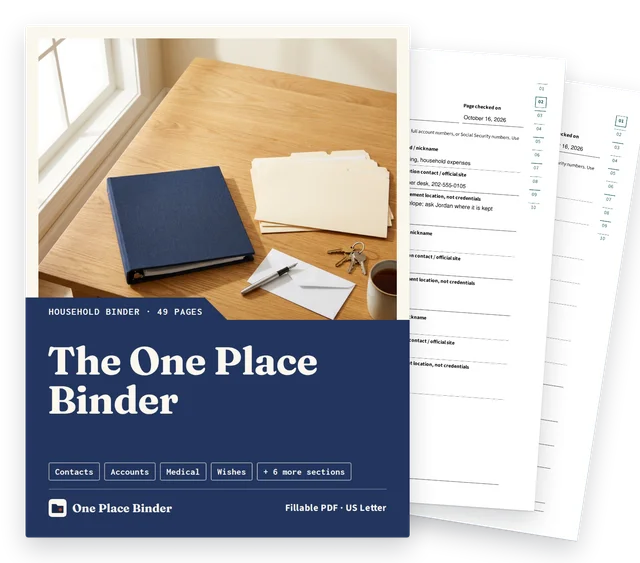
Buyers of the One Place Binder get one fillable PDF, US Letter, for $11.99, as an instant download after checkout. A digital-life map records where access instructions are kept, never passwords. The printed lines stop at a location and the last four digits. Not legal advice. Not a will.
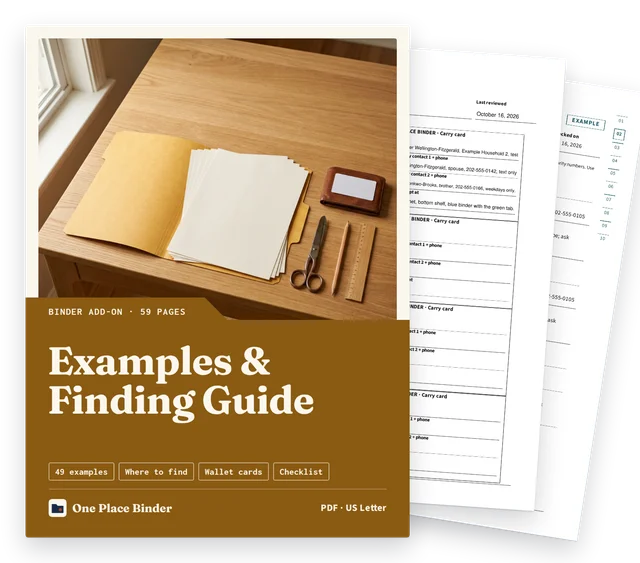
To see the kind of answer a page expects, the Examples and Finding Guide shows a filled example of every binder page for a fictional household, plus a where-to-find guide. It is $4.99. Examples are for reading, not for copying the invented names into your folder. The file holds no blank binder sections.
A death binder does not close accounts, and it does not replace a will. That is the limit of a folder. It makes the next phone call shorter because the number and the location are already written.
How those legal papers fit into a longer order of work is in the end-of-life planning checklist. The records-versus-chores split is in what a home binder is. Paper types to look for are in the important documents list.
Questions
What should go into a death binder?
Contacts, where signed legal papers are kept, institution names with last four digits, insurance locations, and a note on where digital access instructions live.
What to include in an in case of death binder?
The same sections: people to call, document locations, accounts by institution, and preferences that point at real papers rather than replacing them.
What goes in a death folder?
A death folder holds the same notes as a binder. Use whichever container you will actually put back on the shelf.
What is a death file?
A death file is a set of locations and contacts so a family can find papers and accounts. It is not a will.
What is in case of death folder?
It is that same file, under another name: where things are, who to call, and what not to write down.
What should go in a death binder?
Section by section: contacts, legal-paper locations, accounts, insurance, documents, work benefits, digital life, and wishes.
What is a death binder?
A household folder that tells a trusted person where papers and accounts are. Signing a will is a separate job, done with an attorney.
What to put in a death binder?
Put locations, phone numbers, and last four digits. Put passwords and full account numbers somewhere else, or leave them out.
What goes in a death binder?
See the section list in this guide. Each section is a place to write a location, not a place to store every original.
What is in a death file?
Names, numbers to call, and where certificates and policies are filed. Certified copies still come from the issuing office.
What should be in your death file?
A handoff line, a contacts page, and a line for each account that names the institution. Update the date when something changes.
How can I create a DIY death binder?
Label a folder with the sections below and fill locations first. A printed form is optional.
How to create a death binder?
Gather locations, write them, tell one person where the folder is, and date the front.
How to prepare a death binder?
Start with the handoff and the contacts. Add account institutions next. Legal papers stay with the attorney who prepared them.
What should be included in a death binder?
Include findable facts. Exclude passwords, PINs, security answers, full account numbers, and a Social Security number written out.
How to make a death folder?
One folder, the section list, and a pen. Tell one person the location when the first page is filled.
How to make an in case of death binder?
Use the section list, write locations, and keep signed wills and trusts where the location line says they already are.
How to build an in case of death binder?
Build it in one sitting for the contacts and locations you already know. Add the rest when you next open a statement.