Packing checklist for moving, room by room
Published 2026-10-16 · Updated 2026-10-16
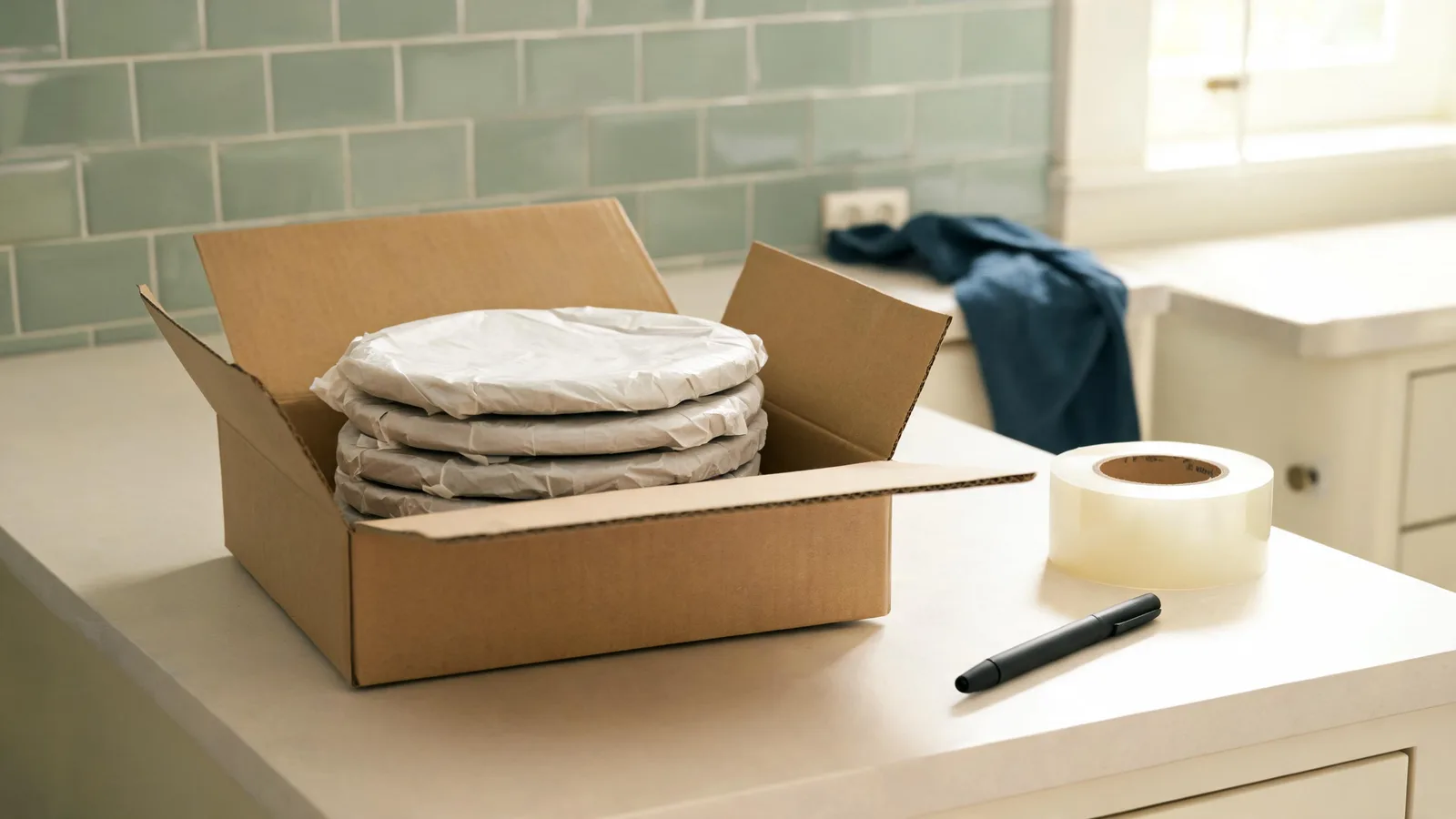
Pack by room, least-used spaces first, and give every box an ID, a destination room, and a short contents line. Mark whether it is packed, fragile, loaded, and arrived. Bellhop's room-by-room page says to label every box with room and contents and to number boxes for tracking. The first result checklist has no box ID line. The second result checklist has no arrived field. The third result checklist has no box ID.
There is no federal packing start date on the government pages opened for this guide. The Two Small Men checklist starts rarely used items at its two-weeks-before stage and the room-by-room push at one week before. National Van Lines says start clothes at least two weeks in advance, beginning with out-of-season or rarely worn clothing, and pack essentials last.
Room order
Use this order. It follows Bellhop's suggested packing order, not a statute.
- Storage, attic, garage shelves, and seasonal decor. Bellhop's suggested order starts with storage areas, seasonal items, and non-essential rooms.
- Books, off-season clothes, and other goods you will not need before move week.
- Non-essential kitchenware may go early with those storage items.
- Bedrooms, after off-season clothes are already boxed.
- Living room decor and electronics. Wrap fragile pieces one at a time, and label cords, as that page describes.
- Kitchen and daily essentials last. Bellhop's suggested packing order moves through bedrooms and living spaces, then packs the kitchen and daily essentials last. The same page says the kitchen takes longer than any other room; that time note is separate from the order.
- Bathroom and daily-use items last, plus one open-first box that stays in your car.
Pack one room at a time. Mixing rooms in one box is on Bellhop's list of habits that slow unpacking. If a box has to mix, say so on the contents line and pick one destination room anyway.
A box row you can copy
A label on the carton is not a record you can check at the truck. Write one row per box:
- Box ID. Use a short code such as K12 or B3. The same code goes on the top and on two sides.
- Destination room. The room where it should be set down, not only the room it came from.
- Contents. Two lines is enough: "winter coats, boots" beats a novel.
- Packed. Tick when the box is taped.
- Fragile. Tick when it needs the top of a stack, not the bottom.
- Loaded. Tick when it is on the truck, or note that it stayed in the car.
- Arrived. Tick at the new place, and note damage or a missing item in a short field.
The first result's printable file, opened from the Two Small Men page, tells you to label destination room on the top and sides. It is a timeline of tick boxes, not this row. Bellhop tells you to number boxes and to write room plus contents, and the page stops there. National Van Lines labels clothes by category, such as winter clothes or shoes, and stays on wardrobe packing.
An illustrative row, not a real move: box K3, destination kitchen, contents "mugs and the french press", packed yes, fragile yes, loaded yes, arrived yes, note "one mug chipped". The numbers and the chip are made up so the columns are visible. They are not a claim about your kitchen.
On an interstate move, the mover prepares a separate inventory. FMCSA's rights booklet says your mover must prepare an inventory of your shipment, usually when the shipment is loaded, and that both you and the mover sign each page. Your box IDs make that conversation shorter. They do not replace the mover's inventory.
Clothes and dressers
National Van Lines answers the dresser question on its clothes checklist: if the dresser is sturdy and the movers approve, lightweight clothes can stay inside; remove heavier items. That is one company's page, not a rule for every crew. Ask before you leave drawers full.
For the clothes that do go in cartons:
- Hanging suits and dresses: wardrobe boxes, still on hangers.
- Folded everyday clothes: suitcases, duffel bags, or cardboard boxes. That page also describes a flat fold and a roll.
- Shoes: separate from clothes, stuffed and wrapped, stacked if you still have the shoeboxes.
- Bulky seasonal jackets: vacuum bags, if you use them, after the off-season sort.
Sort before you pack. Unwanted clothing can be donated; the Two Small Men checklist puts that sort in its early weeks, next to the inventory of what you will actually move.
What stays out of the truck
Bellhop lists medications, important documents, valuables, perishables, and hazardous materials as items to keep with you rather than on the truck.
Ready.gov's kit page includes important family documents such as copies of insurance policies, identification, and bank account records, saved electronically or in a waterproof, portable container. Put the originals or the copies in the car box, not in a random carton.
The EPA's household hazardous waste page says products such as paints, cleaners, oils, batteries, and pesticides can contain hazardous ingredients and require special care when you dispose of them. Leftover paint and a half-full cleaner are a disposal question for your local collection program, not a "maybe it will be fine in a box" question.
FMCSA's booklet says federal law forbids you to ship hazardous materials in your household goods boxes or luggage unless you inform your mover. Tell the company before load day what you are unsure about. A written box row that says "paint, ask mover" is more useful than a sealed carton with no ID.
The open-first box stays with you. Toilet paper, a change of clothes, phone chargers, basic soap, pet food if you have a pet, and any daily item you would miss on night one. Two Small Men's printable lists a similar overnight box. It rides in the car.
What a list cannot decide
A packing list cannot tell you what your mover will accept. Specialty items, propane tanks, and plants are questions for that company, asked before you tape the box. The honest limit of this guide is that it is a method, not a contract with your mover.
The wider date order for the whole move is in the checklist for moving. A first move's lease and utility admin is in the moving out checklist.
A file for the box rows
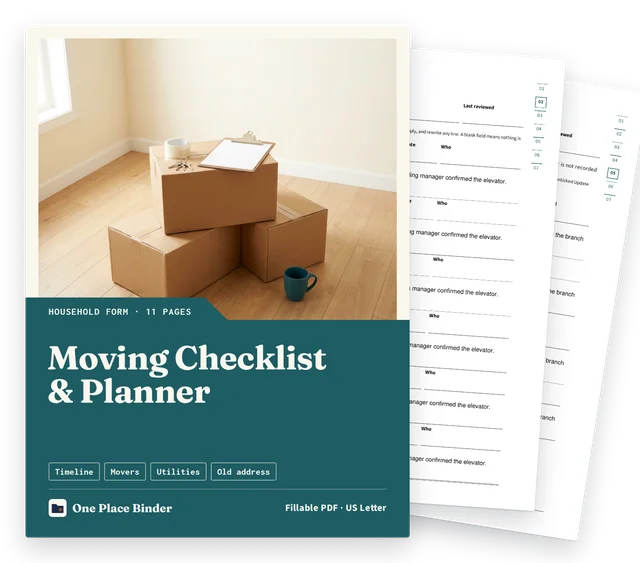
Once the rooms and the box row are clear, loose notes get lost between the old kitchen and the truck. The Moving Checklist & Planner is one fillable PDF, US Letter, for box records. The Moving Checklist & Planner includes a box inventory page with five box records (box ID, destination room, packed, fragile, loaded and arrived boxes, two-line contents and damage or missing-item fields). It holds five boxes on each box record page; for more, print the page again and write by hand. The Moving Checklist & Planner costs $3.00. Not legal advice. Not a will.
You can copy the row onto notebook paper and never buy the file. The file only gives you the columns, a contents list, and a place to keep the rows with the rest of the move.
Questions
How early should I start packing to move?
The Two Small Men checklist starts rarely used items at its two-weeks-before stage and the rest of the house at one week before. National Van Lines says start clothes at least two weeks ahead, out-of-season first. No government page we opened sets one packing start date.
How early should you start packing to move?
Begin with storage and seasonal goods around the two-week mark those packing pages use, and leave daily items for the last days. Your own move date, not a printed rule, sets the pace.
Are you supposed to empty dressers for movers?
National Van Lines says lightweight clothes can stay in a sturdy dresser if the movers approve, and heavier items should come out so the piece is less likely to be damaged. Ask the crew that will load your furniture.
What should I pack my clothes in when moving?
National Van Lines lists wardrobe boxes for hanging clothes, suitcases and duffel bags for folded clothes, cardboard boxes for shoes, and vacuum bags for bulky seasonal wear.
What to not pack when moving?
Bellhops lists medications, important documents, valuables, perishables, and hazardous materials as items to keep with you. The EPA household hazardous waste page says paints, cleaners, oils, batteries, and pesticides can contain hazardous ingredients and need special care when you dispose of them.
How soon should you start packing before you move?
Use the two-week mark on those packing pages for non-essentials, then pack daily rooms last. The government pages we opened do not name a packing start date.
How long should you start packing before you move?
Give the least-used rooms the longest lead. Bellhop's suggested packing order moves through bedrooms and living spaces, then packs the kitchen and daily essentials last. Non-essential kitchenware may go early. The longer kitchen time on that page is separate from the order.
How far in advance should I start packing before I move?
If the date is close, start with one storage closet and one box ID tonight. The opened checklists still place the bulk of room-by-room packing in the final week.